Hair Fall
Hair Fall in Women in Pakistan: Causes and What Helps
By the MERU Hair Care team · Updated · 5 min read
Short answer
The most common causes of hair fall in Pakistani women are low iron or vitamin D, thyroid problems, hormonal changes (pregnancy, postpartum, PCOS), stress, tight hairstyles and breakage from hard water and heat. A gentle routine reduces breakage; heavy shedding needs a blood test and a doctor.
Common causes
- Low iron (ferritin) and vitamin D, both very common in Pakistan
- Thyroid problems and PCOS
- Pregnancy and postpartum shedding, usually 3 to 6 months after delivery
- Stress, fever, crash diets and illness
- Tight ponytails, buns and hijab pins that pull the hair
- Heat styling, rebonding and colouring
- Hard water and rough towel-drying
What helps at home
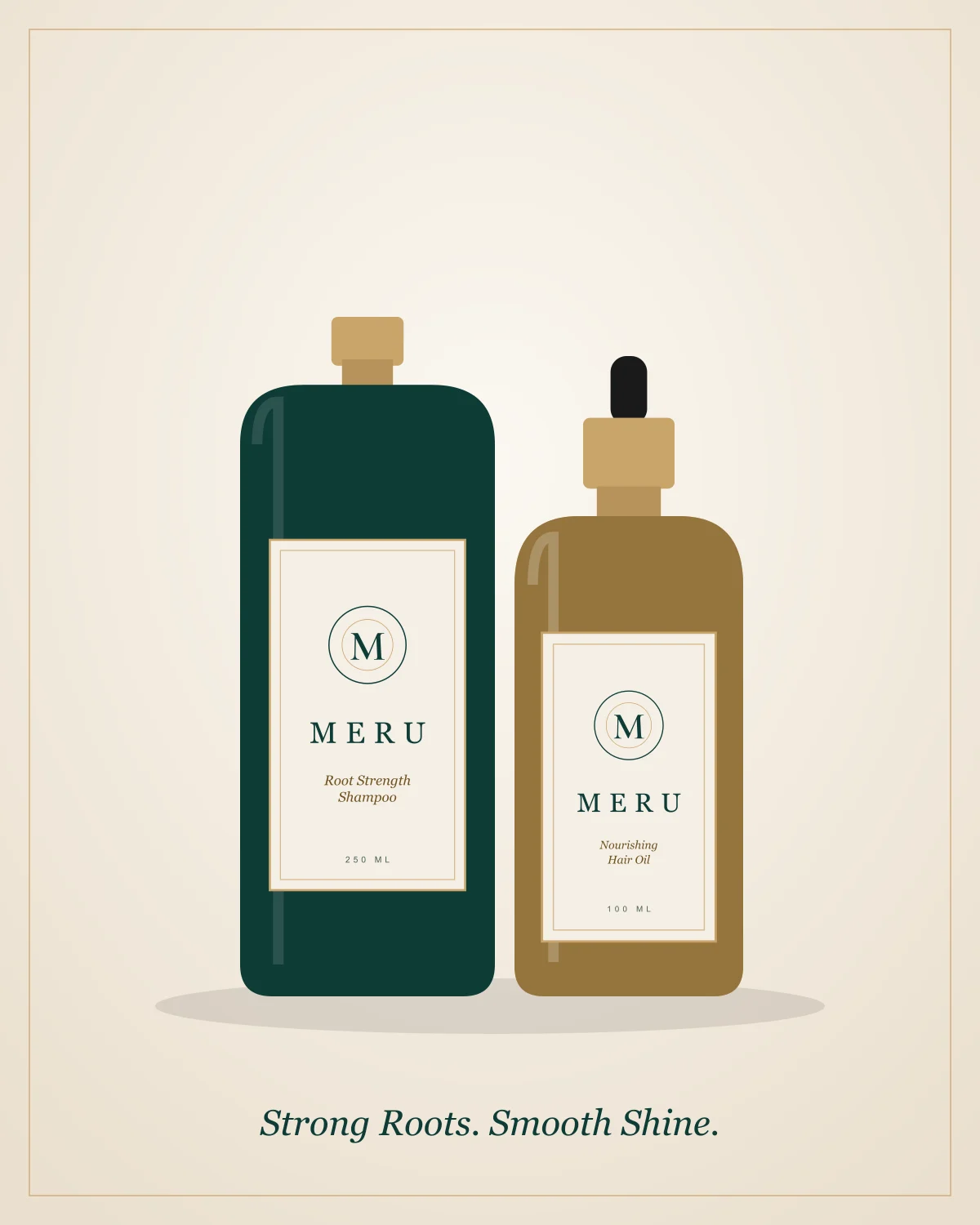
- Oil 2 to 3 times a week before washing with MERU Nourishing Hair Oil.
- Use a gentle shampoo like MERU Root Strength Shampoo.
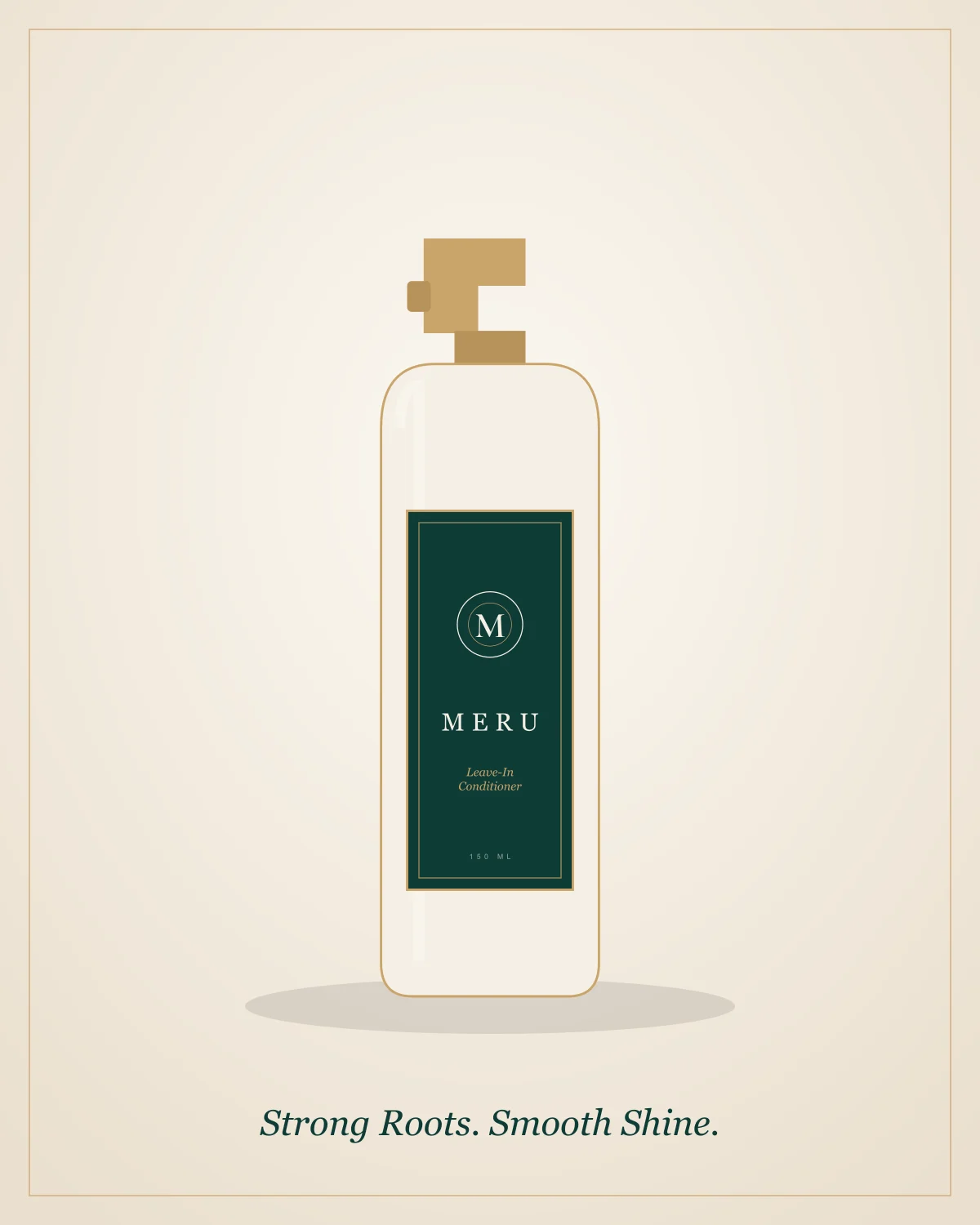
- Detangle with leave-in conditioner, starting from the ends.
- Loosen tight hairstyles and use soft scrunchies, not rubber bands.
- Eat enough protein, iron-rich foods (daal, spinach, red meat) and get your levels tested.
When to see a doctor
See a doctor or dermatologist if shedding is heavy for more than 3 months, if your parting is widening, if you have irregular periods or extreme tiredness, or if your scalp is itchy or painful. Cosmetic products cannot treat hormonal or deficiency-related hair loss.
Frequently asked questions
Is postpartum hair fall normal?
Yes. Many women shed a lot of hair 3 to 6 months after delivery. It usually settles within a year. A gentle routine and good nutrition help.
Can a hijab cause hair fall?
A hijab itself does not, but tight pins, tight scarves and not washing the scalp enough can cause breakage and irritation. Keep it loose, breathable and clean.
Which blood tests should I ask for?
Doctors commonly check ferritin (iron stores), vitamin D, thyroid (TSH) and a complete blood count. Ask your doctor what is right for you.
This guide is general hair care information, not medical advice. For sudden, patchy or persistent hair loss or scalp problems, please see a dermatologist.